Banggai Briefs: Batong
Location: Kp. Bonepuso, Kec. Bulagi Selatan, Kab. Banggai Kepulauan, Sulawesi Tengah
Sound: Batong
Batong is a percussion ensemble tradition from the Banggai Islands, an archipelago off the eastern arm of the sprawling mega-island of Sulawesi. The people in this region - Seasea in the mountainous interior of Peling Island and Banggai elsewhere along the coasts - embrace batong as indispensable for ritual life, with the music playing a key role in weddings, village gatherings, and the greeting of esteemed guests.
I suppose I was the esteemed guest in this case, as I had pulled up to the coastal village of Bonepuso inquiring about traditional music in the area and was soon invited to a bespoke performance organized by the acting village chief, Pak Aslan.
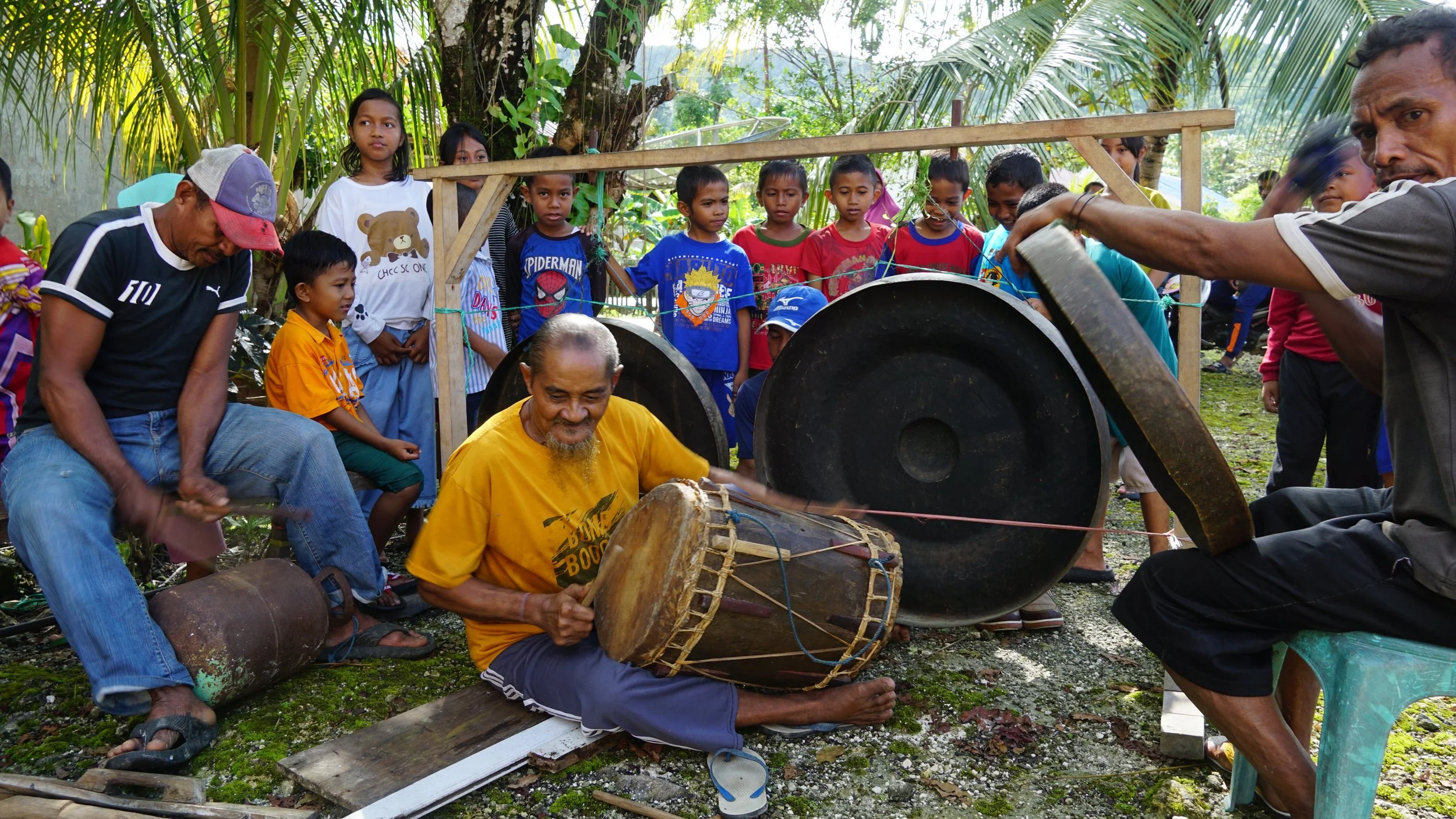
The next morning, we gathered at that great Indonesian village meeting place, the gravel-and-weeds field in front of the bale desa or village hall. It was already sauna-hot out at 8:30am, so we set up under some palms off in a corner, a big wooden frame dragged out of the town hall and burdened with two large, bossed iron gongs.
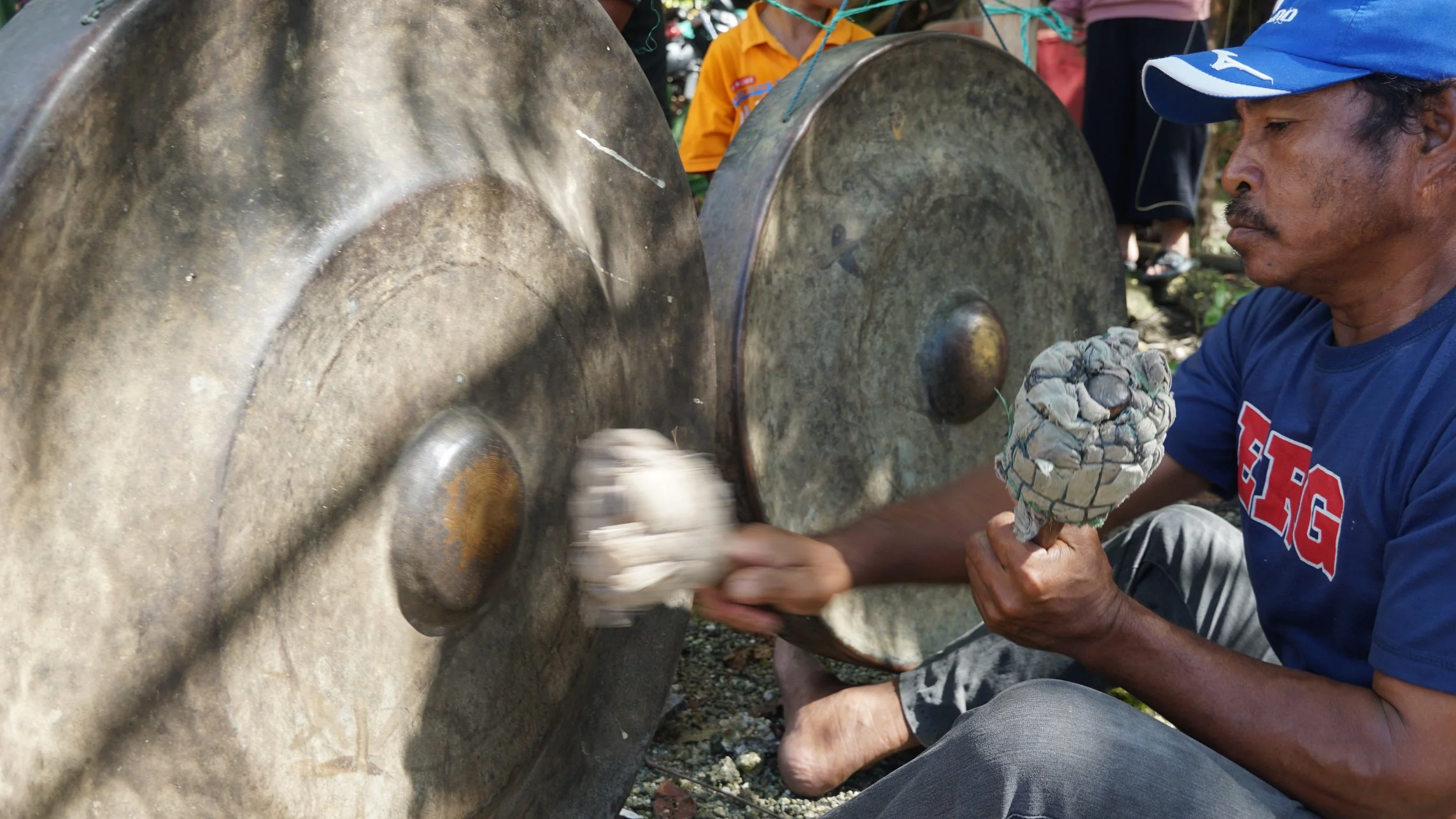
These were the poduwol and sinapit, the metronomic heart of batong, played along with a third smaller gong, tutung, which is held in the lap of the player. A bobolon, a stout double-headed goatskin drum, was hauled over and placed to be played within blasting radius of the large gongs. Somebody fetched a rusty old propane tank and set it on its side beside a bench.
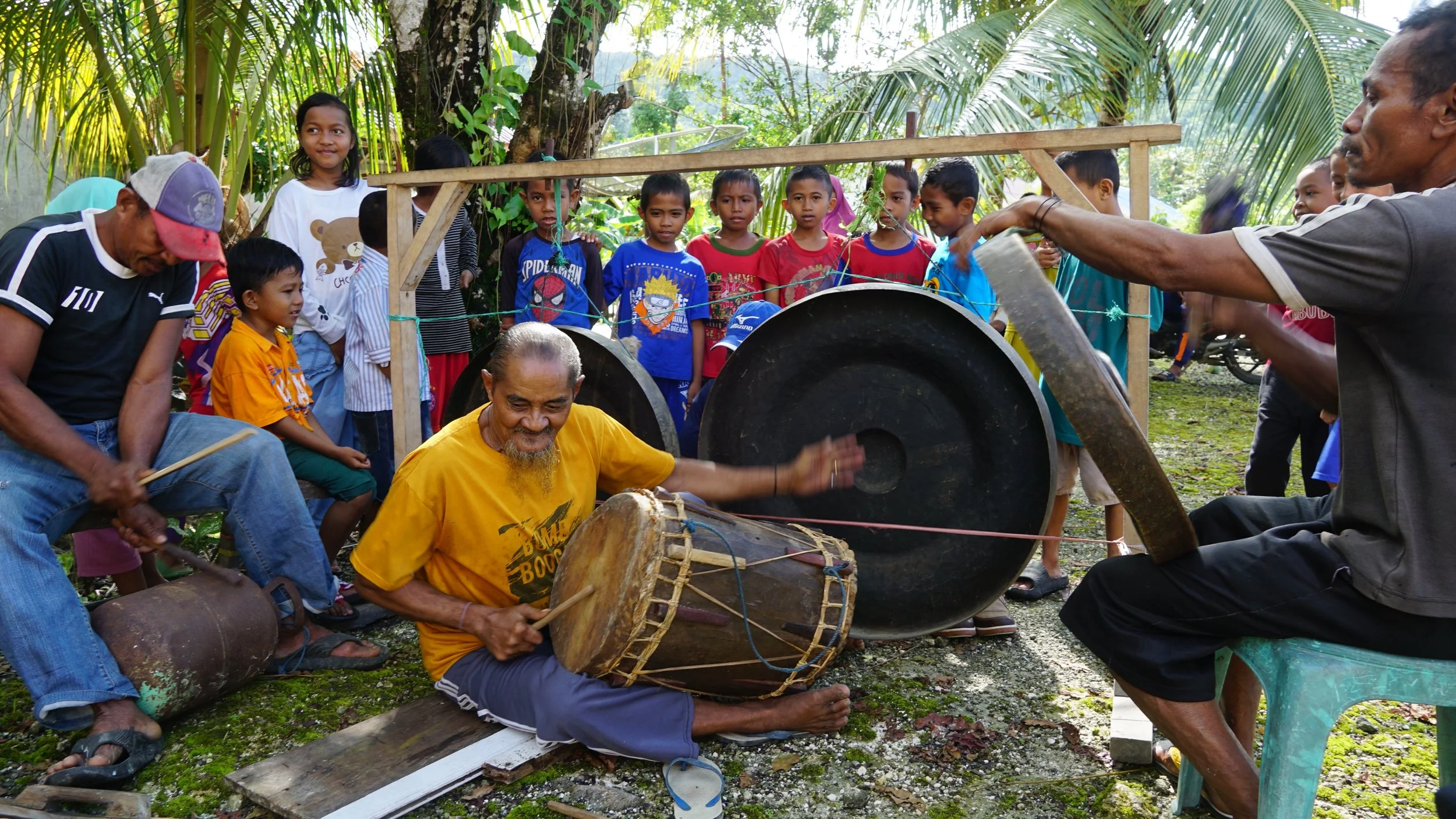
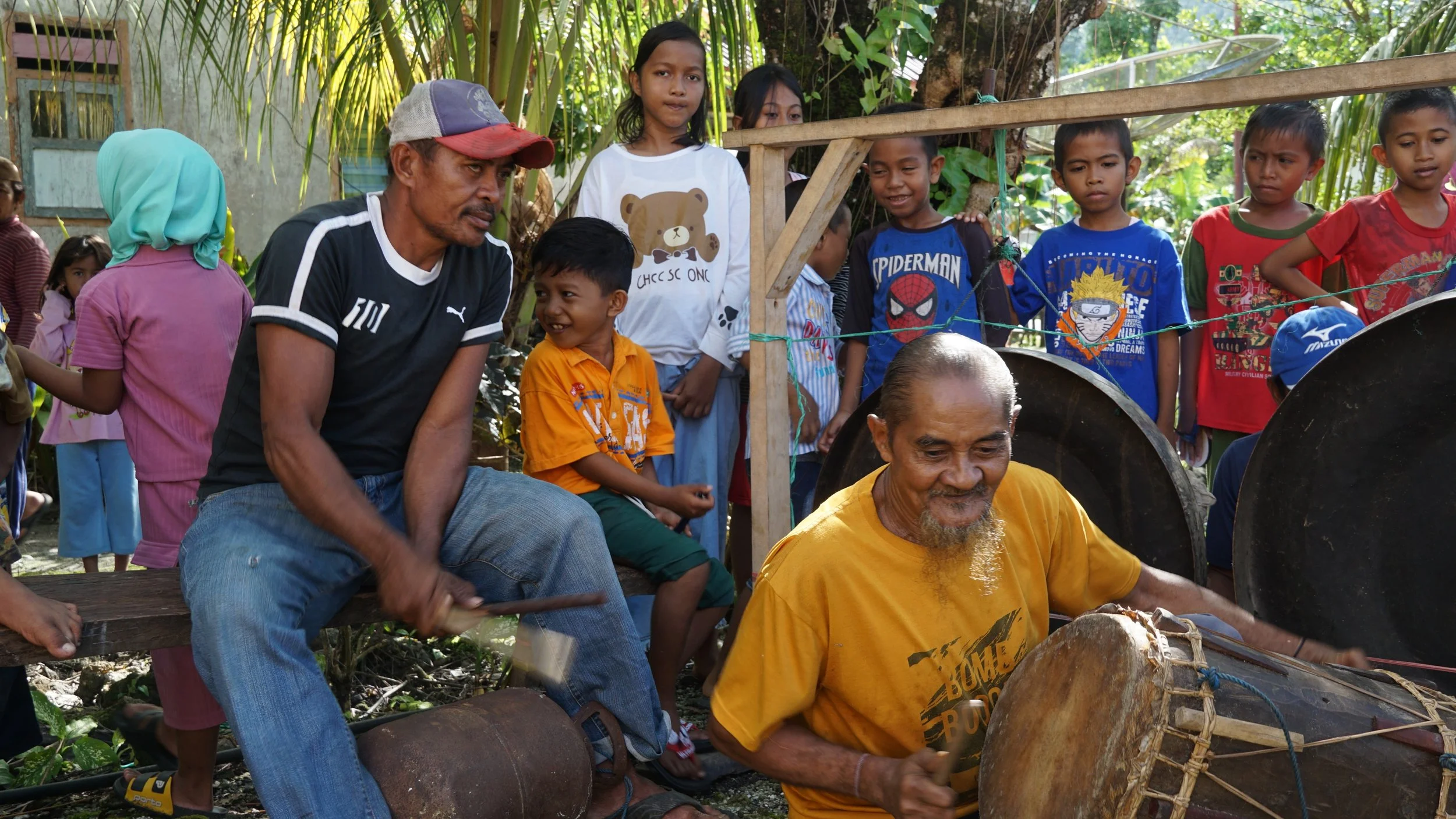
Soon the musicians arrived with seemingly half the neighborhood in tow. There were some smiley old-timers I’d met the day before, Pak Lamani Baalut and Pak Ruben Kalumbatan, who sat huddled up against the bobolon - Pak Lamani had played me some batong rhythms of the poponding tube zither, the patterns so deeply ingrained in him that he could effortlessly translate the drum and gong parts into that medium.
The rest of the ensemble was filled in by Lean Molunggui on the hanging gongs and Yesman Didia on the tutung, with Atnanius Baalut on the propane tank. This last one may seem out of place, but it fills in a key instrumental role called leles in which rhythms are often clanked out on the rim of the thin gongs.
Batong music features only a handful of pieces, with each tied to an accompanying dance: baganjar, for instance, is used to accompany the martial arts-inspired ganjar, also called kuntau. In this piece, we can hear the dynamic and distinctive six beat rhythm that often accompanies martial arts across the archipelago, from West Sumatra to Bulukumba in South Sulawesi. This trans-archipelago link leads me to believe that elements of batong itself may have once been imported by seafaring peoples of Sulawesi like the Bugis or Bajau who still play nearly identical rhythms in their own drum-and-gong ensembles.
After a stirring demonstration of ganjar by Yapet Baalut and Leman Molunggui (more symbolic strutting then a true spar), the group moved on to balatindak, a war dance once performed to demonstrate fierceness and strength to visiting kings and dignitaries. Holding a wooden shield, Pak Yapet and Mariam Toluuk took turns nimbly shuffling across the green and planting their feet in the earth along with the beat of the drums (the name of the dance, Pak Aslan explained, came from tindak - “hard steps, like a horse.”) The elder dancers feinted and retreated with a raw energy that would have been intimidating if not for the smiles that spread across their faces as their neighbors egged them on.
Finally, a piece featuring traded vocals by Pak Lamani and Pak Ruben, baaya. The rhythm, also called Tabua, provided an insistent pulse for dancers Bu Sarni and Bu Merry, who circled each other with small, hopping steps, their arms outstretched gripping the ends of colorful scarves, selendang.
By the time we finished, the hot sun was baking us all on the village green. The gongs were still swinging in their stand while we sat and laughed in the shade of those palms, sharing even more songs and stories. The batong had served its role: bringing folks together, energizing the crowd, buoying their moving bodies through space as it has for generations.
When the gongs had been packed up and the kids wandered home, I heard a familiar sound from inside the village hall - someone had connected their phone by bluetooth to the village PA and was blasting videos of the batong sesh over it, compressed and distorted: an encore.